For many dairy farmers, buying a milking machine for cows is no longer simply a way to save time. It is a decision that directly affects milk production, udder health, labour efficiency, milk quality, and ultimately farm profitability.
Yet many farmers still choose a machine based solely on price.
The real question is not, “Which machine is the cheapest?” but rather, “Which machine will protect my cows, improve milking efficiency, and deliver reliable performance for years?”
A milking machine interacts with your cows twice every day. If it is poorly designed or improperly maintained, it can lead to teat damage, incomplete milking, reduced milk yield, and an increased risk of mastitis. On the other hand, a quality milking machine helps ensure comfortable milking, better udder health, and consistent milk production.
This guide explains what farmers should look for before investing in a milking machine for cows and why choosing the right technology matters.
Why More Dairy Farmers Are Switching to Milking Machines
Labour shortages continue to be a growing challenge for dairy farms across India. Skilled milkers are becoming harder to find, and maintaining consistency in manual milking can be difficult.
A properly designed cow milking equipment helps farmers:
- Reduce dependency on labour
- Maintain a consistent milking routine
- Improve milk hygiene
- Save time during every milking session
- Reduce physical effort
- Improve milk let-down
- Support better udder health
- Increase overall farm efficiency
However, these benefits are only achieved when the machine is designed according to proper milking principles.
The Hidden Cost of Choosing the Wrong Milking Machine
Many cow milking equipment available in the market may look similar from the outside, but the quality of components and engineering inside can vary significantly.
A low-cost machine may appear to save money initially, but over time it can lead to:
- Increased mastitis cases
- Reduced milk yield
- Teat damage
- Frequent repairs
- Downtime during milking
- Higher maintenance expenses
- Poor availability of spare parts
A milking machine for cows should be viewed as a long-term investment rather than a short-term purchase.
Mastitis: One of the Biggest Reasons Farmers Adopt Milking Machines for Cows
Mastitis remains one of the costliest challenges in dairy farming.
This udder infection affects milk quality, reduces production, increases veterinary expenses, and can significantly impact farm profitability.
Poor milking practices and improperly functioning cow milking equipment are among the factors that contribute to mastitis risk.
A quality milking machine helps support mastitis prevention by:
- Ensuring complete milk-out
- Maintaining consistent vacuum levels
- Reducing teat stress
- Supporting hygienic milk collection
- Promoting better udder health management
For progressive dairy farmers, protecting udder health is just as important as increasing milk production.
Why Vacuum and Pulsation Matter
Most farmers focus on the motor and bucket size when comparing machines.
However, the true performance of cow milking equipment depends on two critical systems:
Vacuum System
The vacuum system removes milk from the udder.
If vacuum pressure is unstable or excessive, it can:
- Cause teat swelling
- Create discomfort during milking
- Increase teat damage
- Reduce milking efficiency
A quality machine maintains stable vacuum levels throughout the milking process.
Pulsation System
Pulsation allows the teat to relax between milk extraction cycles.
A properly designed pulsator mimics the natural suckling action of a calf, allowing milk to flow efficiently while maintaining blood circulation in teat tissues.
Poor pulsation can result in:
- Cow discomfort
- Teat congestion
- Incomplete milking
- Increased udder health issues
Why Cluster and Liner Quality Should Never Be Ignored
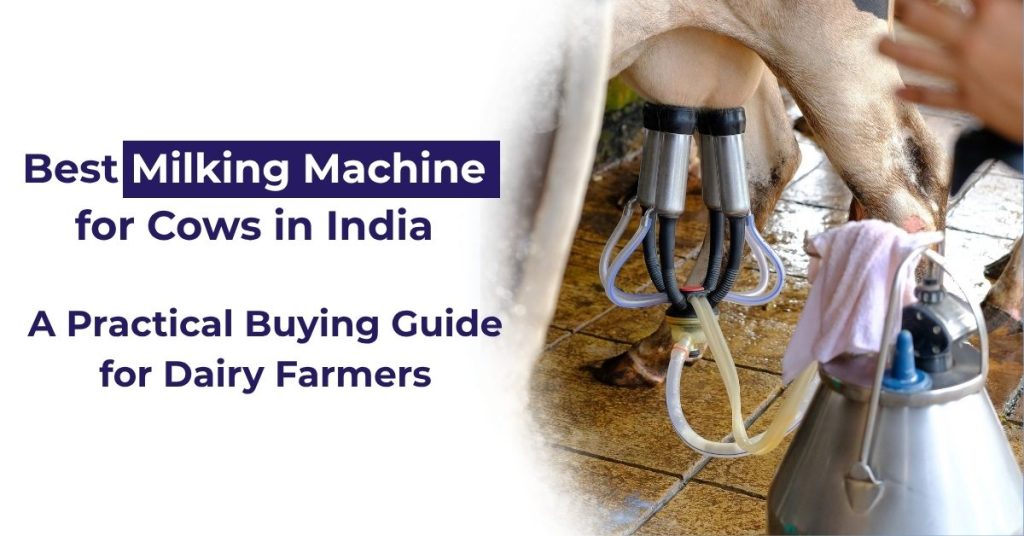
The cluster assembly is the only part of the machine that comes into direct contact with the cow.
Unfortunately, this is also the component where many low-cost machines compromise quality.
Poor-quality liners and clusters can cause:
- Liner slips
- Air leakage
- Uneven milking
- Increased bacterial contamination
- Teat-end damage
High-quality clusters and liners provide:
- Better attachment to the teat
- Smooth milk flow
- Improved animal comfort
- Better hygiene
- Consistent milking performance
When evaluating a machine, farmers should pay as much attention to the cluster quality as they do to the motor.
Don’t Buy a Milking Machine for Cows Based on Price Alone
Many farmers compare cow milking equipment only by looking at motor size, bucket capacity, or purchase price.
However, the true value of a milking machine lies in how well it protects udder health and performs consistently over time.
What to Evaluate Before Buying
| Evaluation Factor | Quality Milking Machine | Poor-Quality Machine |
| Vacuum System | Stable vacuum throughout milking | Fluctuating vacuum causing discomfort |
| Pulsation | Mimics natural calf suckling | Irregular pulsation causing teat stress |
| Clusters & Liners | Designed for comfort and hygiene | Faster wear and liner slips |
| Udder Health | Supports healthy teat condition | Higher risk of teat damage |
| Mastitis Risk | Supports proper milking practices | Increased health risks |
| Milk Quality | Cleaner milk collection | Greater contamination risk |
| Service Support | Reliable service and spare parts | Limited support availability |
| Long-Term Cost | Better return on investment | Higher maintenance expenses |
The most successful dairy farmers today are moving beyond the mindset of buying the cheapest machine available. Instead, they focus on animal comfort, milk quality, reliability, and long-term profitability.
Why Prompt MilkEasy Is Designed for Modern Dairy Farms
Prompt MilkEasy is designed to address the everyday challenges faced by dairy farmers—labour shortages, time-consuming milking routines, concerns about udder health, and the need for hygienic milk collection.
Built specifically for Indian dairy farm conditions, Prompt MilkEasy combines reliable performance, ease of operation, and animal comfort in a durable and farmer-friendly machine.
Key features include:
- Heavy-duty trolley with durable wheels for easy movement within the dairy shed
- Optimized vacuum system for smooth and efficient milk extraction
- Low-noise operation to minimize stress and discomfort to cattle
- Premium-quality clusters and liners designed for comfortable milking and better teat care
- Food-grade, non-toxic transparent milk tubes for hygienic milk collection and easy cleaning
- Stainless steel milk bucket with a capacity of 25–30 litres
- Direct coupling of the electric motor with the vacuum pump for enhanced safety and dependable performance
- Smooth locking mechanism designed to prevent injury to cattle during operation
- Durable construction engineered for long service life under demanding farm conditions
Beyond its features, Prompt MilkEasy is designed with a clear focus on what matters most to dairy farmers—animal welfare, milk quality, and operational efficiency.
Final Thoughts
A milking machine is one of the most important investments on a dairy farm, influencing milk production, animal comfort, udder health, labour efficiency, and overall profitability every day. While it may be tempting to choose a machine based solely on price, doing so can result in hidden costs such as mastitis, reduced milk yield, frequent repairs, and long-term animal health issues. Farmers should instead evaluate factors such as vacuum stability, pulsation quality, cluster design, hygiene standards, durability, and after-sales support before making a decision. The best milking machine for cows is not necessarily the cheapest—it is the one that protects your cows, maintains udder health, ensures hygienic milk collection, and delivers reliable performance year after year.
Frequently Asked Questions (FAQs)
1. Which is the best milking machine for cows in India?
The best milking machine is one that offers stable vacuum, reliable pulsation, hygienic milk collection, and quality clusters and liners while ensuring animal comfort and udder health.
2. Is a milking machine safe for cows?
Yes. A properly designed milking machine for cows mimics the natural suckling action of a calf and provides safe, comfortable, and efficient milking.
3. Can a milking machine help reduce mastitis?
Yes. Quality milking machines for cows support better udder health through consistent milking, proper vacuum levels, and hygienic milk collection practices.
4. What should farmers check before buying a milking machine?
Farmers should evaluate vacuum stability, pulsation quality, cluster and liner quality, hygiene standards, durability, and after-sales service support.
5. What are the disadvantages of low-quality milking machines?
Poor-quality machines can cause teat damage, inconsistent milking, liner slips, higher maintenance costs, and increased udder health risks.
6. How often should milking machine liners be replaced?
Liners should be inspected regularly and replaced according to the manufacturer’s recommendations to maintain milking performance and udder health.
7. Why are vacuum stability and pulsation important?
Stable vacuum and proper pulsation ensure efficient milk extraction, animal comfort, and better udder health during every milking session.