
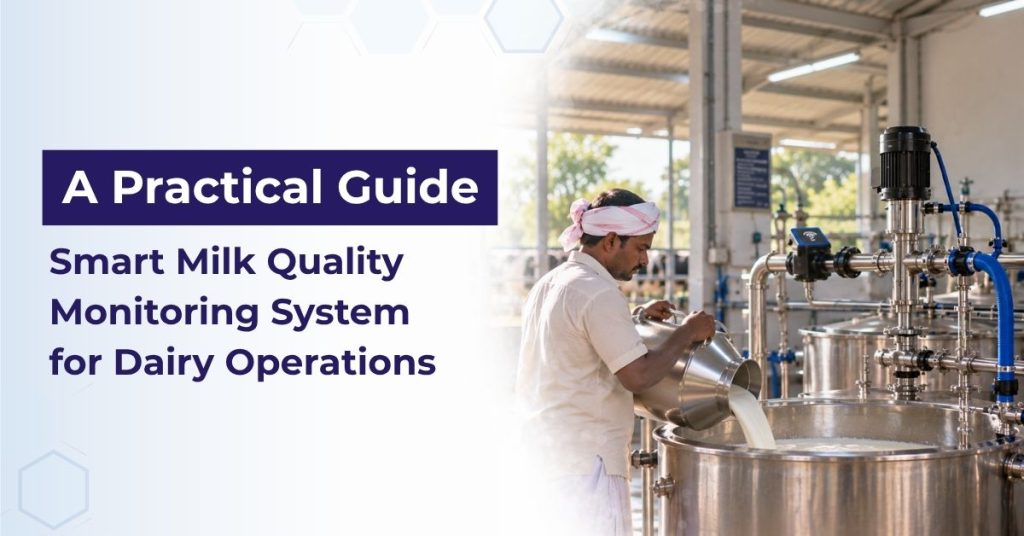
As the world’s largest dairy producer, India has a robust network of 80 million milk producers who contribute to the industry. However, for milk to make it into one’s morning cup of tea, it must pass stringent quality checks. Milk quality issues can begin even before it enters the processing plant; it often begins at the source. While periodic sampling can help assess milk quality, dairies need a connected approach that brings testing, monitoring, and decision-making together along the cold chain. Here’s where a smart milk quality system helps enhance dairy operations.
Challenges in Milk Quality Monitoring
Milk quality can be affected by several factors, including temperature fluctuations, delayed chilling, adulteration, and so on. It is important to keep an eye on each batch of raw milk coming through various levels of the cold chain; an oversight at any stage could result in several litres of milk being wasted.
Traditional testing approaches often rely on manual sampling at specific checkpoints. While these methods still have value, they may not always provide the continuous visibility required to manage risks across complex supply chains.
This is where a smart milk quality monitoring system becomes valuable. It creates a structured process for monitoring critical quality parameters throughout milk collection, reception, storage, and processing operations.
Components of a Smart Quality Monitoring System
A smart milk quality monitoring system comprises multiple apparatus that test milk, enhance operations, and drive quality management practices:
Sampling and Collection
Representative sampling at collection centres, tanker reception points, and processing plants is essential for obtaining accurate results. Standardized sampling procedures reduce variability, whereas even the most advanced equipment cannot compensate for inconsistent sampling.
Milk Quality Analyzer
Modern analytical tools allow dairies to conduct rapid milk quality testing without creating bottlenecks in daily operations. These systems monitor compositional parameters and help quality assurance teams maintain consistent standards across incoming milk samples.
Dairy operations utilize milk testing machines that check for a sample’s fat, SNF, protein levels, density, and so on. These machines are often installed at the first few levels of the cold chain and help dairies make informed decisions even before the milk enters production.
Data Recording and Traceability
All decisions are made on the basis of data, and that can be obtained with sufficient traceability across the cold chain. Quality monitoring becomes significantly more effective when test results are linked to specific milk sources, collection routes, and batches. Hence, when deviations occur, operations can quickly identify affected milk and take corrective action.
Temperature Monitoring
Fluctuations in temperature are one of the most common causes of quality deterioration in milk. Continuous temperature monitoring across collection centres, storage tanks, and transportation systems helps protect milk quality and reduce microbial growth risks. Temperature data also provides valuable context when interpreting testing results.
Best Practices in Dairy Operations
Technology alone does not guarantee better quality outcomes. The effectiveness of a monitoring system, in fact, depends on how it is implemented and managed.
Establish Clear Quality Thresholds
Every dairy operation should define acceptable ranges for key parameters based on product requirements, regulatory standards, and procurement objectives.
Clear thresholds allow teams to respond consistently when results fall outside expected limits.
Verify Instrument Performance and Calibration
Instruments become highly reliable only when they go through routine checks and calibrations. This also includes preventive maintenance schedules to maintain testing accuracy.
Standardizing Testing Across Multiple Locations
To ensure that milk quality measurements remain consistent, it is important for dairies to standardize procedures, calibration schedules, and testing protocols.
Use Data for Trend Analysis
Many quality incidents develop gradually rather than appearing suddenly. Reviewing historical testing data can reveal recurring issues related to collection routes, supplier groups, seasonal changes, or cooling infrastructure. Trend analysis helps operations address problems before they affect production performance.
Regular Training for Dairy Personnel
Even with well-maintained equipment, human error can still hamper results and lead to testing inconsistencies. Operators must be trained regularly in sampling procedures, calibration practices, equipment handling, etc.
The Role of Analyzers in Maintaining Consistency and Compliance
Analyzers play a central role within a broader monitoring ecosystem. For many dairy operations, an ultrasonic milk analyzer offers a practical way to assess multiple milk quality parameters within seconds. Integrating these analyzers into the smart milk monitoring system helps manufacturers extract the most out of their incoming milk. As an example, analyzers such as the iSmart Milk Analyzer are often considered within this larger ecosystem. Their value lies in supporting accurate, repeatable measurements that strengthen day-to-day monitoring activities.
Every dairy operation benefits from periodically reviewing milk quality from collection to processing. Want to know how our milk analyzing solutions can impact your operations? Connect with our expert.
Frequently Asked Questions
1. What is a smart milk quality monitoring system?
A smart milk quality monitoring system is a structured approach that combines testing equipment, sampling procedures, temperature monitoring, traceability, and data management to continuously evaluate milk quality throughout dairy operations.
2. Why is continuous milk quality monitoring important?
Continuous monitoring helps identify quality issues earlier, reducing the risk of processing losses, compliance concerns, product inconsistencies, and unnecessary waste.
3. How does a milk testing machine support dairy operations?
A milk testing machine provides rapid measurements of key quality parameters, enabling quality teams to make informed decisions about incoming milk before it enters production.
4. What is an ultrasonic milk analyzer used for?
An ultrasonic milk analyzer is used for routine compositional analysis of milk, helping dairies evaluate parameters such as fat, solids, and other quality indicators quickly and consistently.
5. What should dairy plants look for when selecting milk quality testing equipment?
Organizations should focus on testing accuracy, repeatability, ease of calibration, operational suitability, service support, and compatibility with existing quality management processes.
6. Can a milk purity testing machine help detect adulteration?
Yes. A milk purity testing machine can support quality control programs by helping identify irregularities that may indicate adulteration or deviations from expected milk composition standards.
7. How often should milk quality testing be performed in a dairy plant?
Testing frequency depends on operational requirements, milk volume, supplier variability, and regulatory obligations. Many dairies conduct testing at reception, during storage, and at key production checkpoints to maintain consistent quality oversight.