India is home to a bovine population of more than 300 million; yet the average milk yield per cow remains disappointingly low.
There are many reasons behind this, but a major culprit is the lack of nutritious green fodder. Because growing green fodder demands time and resources, farmers often turn to low-quality dry feed for their animals. Here is where the innovative science of hydroponics steps in to offer a solution.
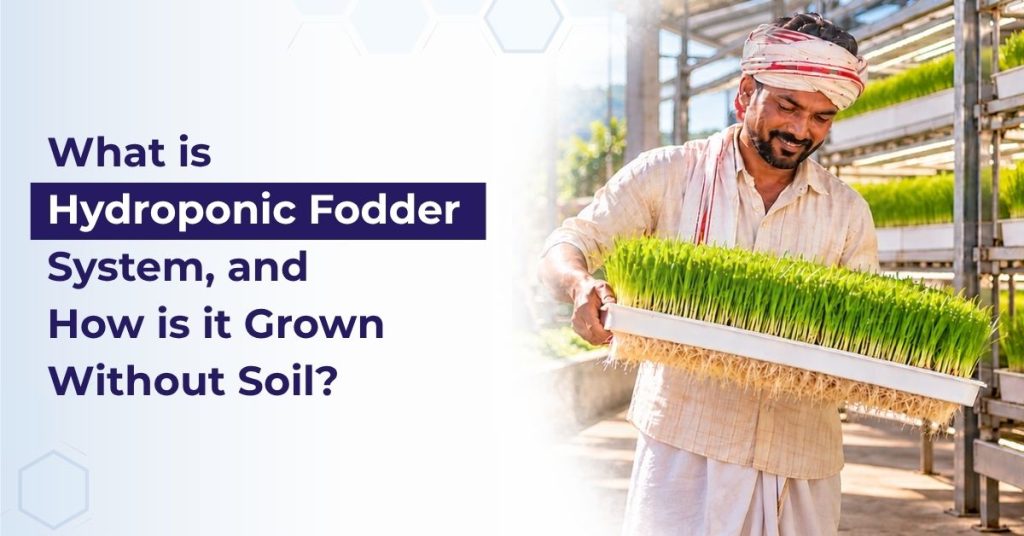
Hydroponic fodder systems such as Prompt FodderEasy have quietly revolutionized cattle feeding. These systems allow farmers to grow lush, green fodder without soil and in record time, ensuring a steady supply of nutrition for their herds. But how does this soil-free magic actually work? Let’s take a closer look at the process behind growing hydroponic fodder.
What is a Hydroponic Fodder System?
A hydroponic fodder system grows livestock feed using a unique method that relies on water, nutrients, and a carefully controlled environment, all without a single handful of soil. Instead of roots digging into the earth, the plants thrive in a nutrient-rich solution that serves as their lifeline. Here’s how it all works:
Step 1 – Germinate: Seeds, usually barley, wheat, oats, rye, or sorghum, are spread on a shallow tray and supplied with clean water. They soak for 8-12 hours, which helps them germinate.
Step 2 – Grow: Once they germinate, they are placed along specialized structures with hydroponic fodder trays that have a nutrient-rich solution running through them. The seeds are constantly misted with clean water and exposed to a controlled environment, helping them grow.
Step 3 – Harvest: Hydroponic fodder takes about 7 days to fully grow into a mat. Farmers can harvest it and feed it fresh to their livestock.
This entire system is crafted to supercharge the nutritional value of the feed while speeding up its growth. Because the plants receive exactly what they need from the start, there is no need for extra fertilizers or pesticides.
How Does Hydroponic Fodder Grow Without Soil?
Farmers are drawn to hydroponic fodder systems for their efficiency. Because the crops absorb nutrients straight from the growing medium, there is no need for soil or the extra space that soil demands.
The nutrient solution is formulated to supply all essential elements that plants typically obtain from soil. It contains balanced macronutrients, including nitrogen, phosphorus, and potassium, as well as micronutrients like iron, magnesium, and zinc.
Additionally, hydroponic fodder trays are designed to facilitate optimal water drainage and air circulation. This keeps the seeds moist but not waterlogged.
How Does Hydroponic Fodder Help in Dairy Farming?
Healthy and successful milk production on farms depends on several factors, including the availability of, and access to nutritious feed.
Hydroponic fodder is preferred because it is digestible and fresh. Sprouting the seeds helps them undergo biochemical changes that improve their palatability and make some nutrients easier for animals to process.
However, growing hydroponic cattle feed often comes with its own set of challenges.
Water scarcity is a major roadblock to growing livestock feed. Farmers struggle to grow green fodder when water is scarce, especially in dry seasons. Traditional farming also requires a lot of space, which is difficult in India because of fragmented marginal dairy farms.
Hydroponic fodder systems solve these challenges. They use less water than field farming, which helps during droughts or off-seasons when crops cannot be grown.
They use a stackable structure where crops grow vertically on hydroponic fodder trays. This optimizes space and suits smaller landholdings.
Modern hydroponic fodder systems like Prompt FodderEasy also use the ‘Nutrient Film Technique’, where a shallow stream of water containing all the nutrients is recirculated along the structure during the growing process. With this process, farmers use about 2–3 litres of water to produce one kilogram of fodder, which is significantly less compared to conventional fodder cultivation.
Why Must Small Dairy Farms Adopt Hydroponic Fodder Systems?
While hydroponic fodder systems can boost efficiency for large dairy farms, small farms stand to gain just as much from adopting this setup:
- Reduce feed costs by 30–50% through improved feeding efficiency.
- Reduce water consumption by 80-90%.
- Produce 7-8 KG green fodder per kilogram of seed.
- Improve milk production by 10-25% since green fodder helps improve cattle nutrition.
- Setup of 100–250 sq. ft should be sufficient to grow green fodder.
- Low maintenance demands of 1–1.5 hours per day to operate and run the system.
Ultimately, while the initial cost of procuring a fodder system may be high, farmers can cut down on the payback period as a result of the above-mentioned benefits.
Is a Hydroponic Fodder System Worth It?
Resources are becoming increasingly limited, whether it is land or water. That’s why it is important for farmers to choose the right solution for their cattle that not only optimizes their operations but also proves to be a profitable investment in the long run.
Hydroponic fodder is one such solution. It provides nutrient-rich feed that works to increase milk yield while overcoming challenges of traditional fodder farming, including increased water consumption, production costs, and labour.
Innovations like Prompt FodderEasy help farmers break free from costly market fodder by providing nutrient-rich feed on-site. This leads to lower feed expenses and greater farm profitability.
To learn more about our hydroponic solutions, contact our experts.
Frequently Asked Questions
1. What is hydroponic fodder, and how does it differ from conventional fodder?
Hydroponic fodder is livestock feed grown without soil using water, nutrients, and a controlled environment. Unlike conventional fodder farming, it requires significantly less land and water while producing fresh green fodder.
2. Which seeds are commonly used to grow hydroponic fodder?
Barley, maize (corn), wheat, oats, rye, and sorghum are among the most commonly used seeds for hydroponic fodder production.
3. How long does it take to grow hydroponic fodder?
Hydroponic fodder from solutions like Prompt FodderEasy is usually ready for harvest within 7 days.
4. Does hydroponic fodder improve milk production in dairy cattle?
The freshness, digestibility, and nutrient availability of hydroponic fodder can contribute to better animal health, feed intake, and overall dairy farm productivity.
5. How much fodder can a hydroponic fodder system produce daily?
Hydroponic fodder systems like Prompt FodderEasy can produce up to 50KG of green fodder every day.