Among the various dairy testing equipment in India, milk analyzers play one of the most critical roles in ensuring milk quality, procurement transparency, and accurate farmer payments.
Every day, thousands of milk samples are tested across village collection centres, dairy cooperatives, and processing facilities using milk testing equipment that helps maintain quality standards throughout the dairy supply chain. The data generated by these systems influences farmer payments, milk quality assessment, and procurement decisions.
Yet many dairy organizations still evaluate milk analyzers primarily based on purchase price.
The reality is that the true value of a milk analyzer machine is determined by its accuracy, repeatability, calibration integrity, and ability to generate reliable data over the long term. An inaccurate analyzer can lead to payment disputes, procurement losses, quality inconsistencies, and reduced farmer trust.
This guide explains the key features to evaluate when selecting a milk analyzer, why accuracy matters, and how the right investment in dairy quality testing equipment can deliver significant returns for dairies and farmers alike.
Why Milk Analysis Is Critical
Milk testing is the foundation of a transparent dairy procurement system.
Every FAT and SNF reading directly influences farmer payments, milk quality assessment, and procurement decisions. Even minor inaccuracies can create significant financial implications when multiplied across thousands of litres of milk collected every day.
An effective milk analyser machine helps dairies:
- Ensure fair and transparent farmer payments
- Improve milk quality monitoring
- Detect milk adulteration
- Reduce procurement disputes
- Strengthen farmer trust
- Support data-driven decision-making
- Improve overall dairy profitability
As dairy operations become increasingly digital, milk analyzers are evolving from simple testing devices into intelligent data-generation systems.
Features That Matter Most in a Milk Analyzer Machine
1. Accuracy and Repeatability
Accuracy is the single most important factor when selecting a milk analyzer.
A difference of even 0.1% in FAT or SNF readings can impact farmer payments and create discrepancies between collection centres and the dairy laboratory.
In addition to accuracy, the analyzer should deliver consistent and repeatable results across thousands of tests. Reliable repeatability ensures confidence in milk quality data and payment calculations.
Why Accuracy Matters in Milk Procurement
Even a small variation in FAT or SNF readings can have a significant financial impact when thousands of litres of milk are tested every day. Inaccurate readings can lead to farmer payment disputes, quality inconsistencies, procurement losses, and reduced confidence in the milk procurement system.
For large dairy organizations, maintaining consistency across multiple collection centres is critical. This is why leading dairies prioritize accurate and repeatable milk testing equipment that delivers reliable results across every location, ensuring transparency for both farmers and dairy operators.
2. Calibration Integrity
A milk analyzer is only as reliable as its calibration.
Traditional calibration methods often involve manual intervention, creating opportunities for inconsistency and unauthorized adjustments. Modern calibration systems provide centralized or cloud-enabled calibration that improves transparency and ensures uniform testing across multiple collection centres.
3. Speed of Testing
Milk collection centres process hundreds of samples every day.
Fast testing reduces farmer waiting time and improves collection centre productivity. However, speed should never come at the expense of accuracy. The ideal analyzer delivers both rapid and reliable results.
4. Cloud Connectivity
Today’s dairy organizations require much more than test results.
Cloud-connected analyzers provide:
- Centralized monitoring
- Historical data storage
- Quality trend analysis
- Calibration tracking
- Cleaning logs
- Real-time visibility across collection centres
This transforms milk testing data into actionable business intelligence.
5. Preventive Maintenance Capabilities
Unexpected equipment failures can disrupt milk procurement operations.
Modern analyzers with self-diagnostic features and preventive maintenance alerts help identify issues before they impact performance, reducing downtime and maintenance costs.
6. Integration with Existing Systems
The analyzer should seamlessly integrate with milk collection software, payment systems, and dairy management platforms to create a connected digital ecosystem.
Looking Beyond FAT and SNF
Traditionally, milk analyzers have been viewed as instruments for measuring FAT and SNF. However, modern dairies are increasingly using milk quality data for broader operational insights.
Historical testing records can help identify quality trends, monitor procurement performance, detect abnormal milk characteristics, and support herd health initiatives.
Accurate milk data enables dairies to move from reactive decision-making to proactive quality management.
Understanding ROI: The Real Return on a Milk Analyzer Machine
When evaluating a milk analyzer, the focus should not be on purchase cost alone.
The real return on investment comes from:
Improved Procurement Transparency: Accurate testing builds trust among farmers and reduces disputes related to milk quality measurements.
Better Milk Quality: Consistent testing helps maintain procurement standards and reduces the risk of poor-quality milk entering the supply chain.
Reduced Operational Costs: Reliable analyzers require fewer recalibrations, less maintenance, and fewer service interventions.
Data-Driven Decisions: Cloud-connected systems provide valuable insights that support quality control, procurement planning, and operational improvements.
Increased Farmer Confidence: Transparent and accurate milk testing encourages farmer participation and strengthens long-term relationships. Over time, these benefits often generate significantly greater value than the initial equipment investment.
Case Study: How Accurate Milk Testing Improved Dairy Performance
A major dairy organization implemented cloud-connected milk analyzers across hundreds of milk collection centres to improve procurement transparency and milk quality monitoring.
By enabling centralized visibility of FAT and SNF data, the dairy was able to monitor milk quality trends in real time, improve consistency across collection centres, and strengthen farmer confidence in the payment process.
The implementation resulted in improved milk quality, greater transparency, and wider acceptance among farmers and collection societies. The dairy also reported measurable improvement in SNF quality and enhanced operational visibility through cloud-based monitoring.
Why Prompt iSmart Is a Smart Choice for Dairy Testing Equipment in India
As dairy procurement becomes increasingly digital, dairy testing equipment in India must deliver more than basic milk analysis.
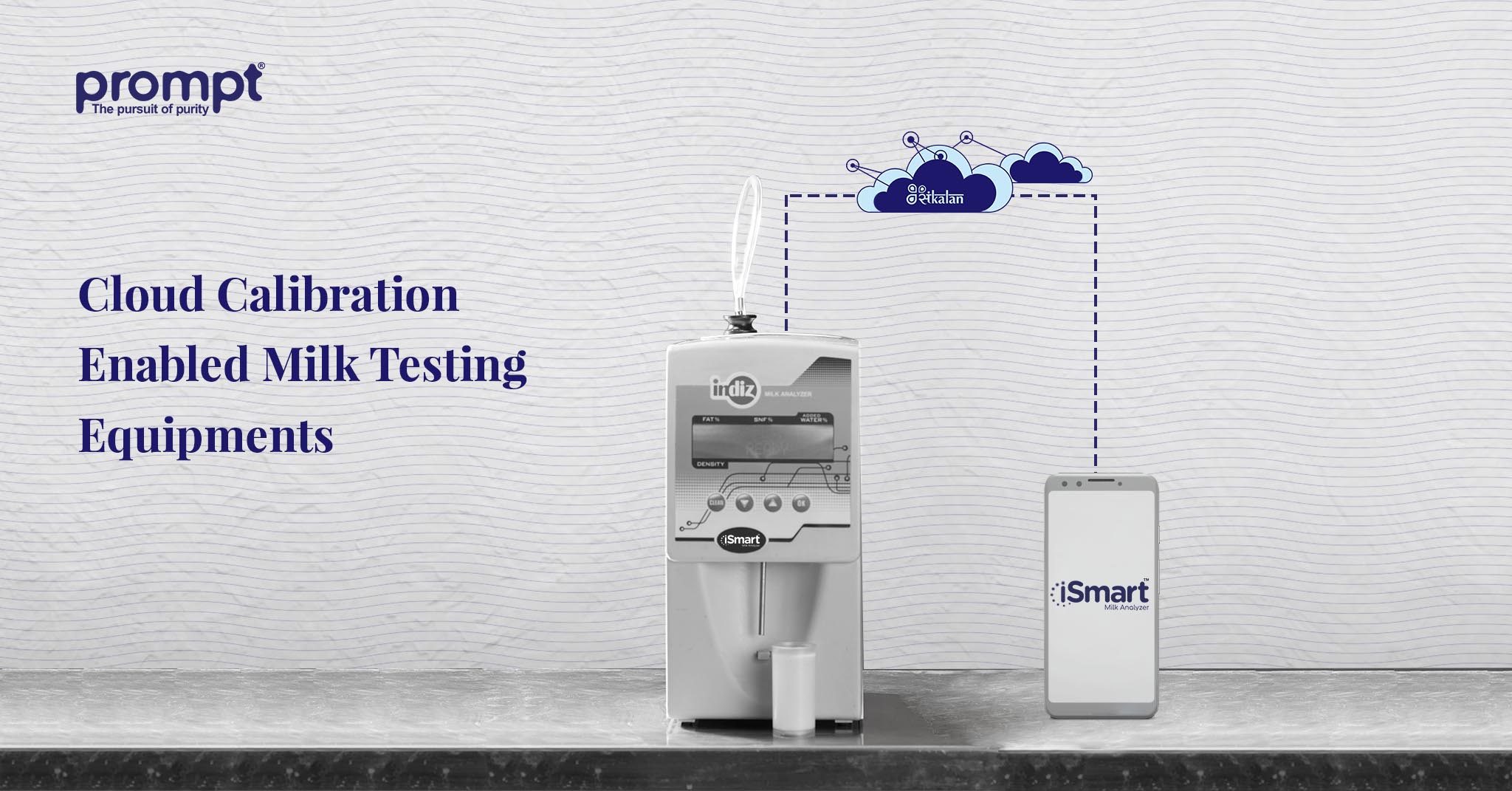
Prompt’s iSmart Ultrasonic Milk Analyzer is India’s first smart and intelligent indigenous milk testing equipment, designed to combine milk quality testing, cloud-enabled calibration, preventive maintenance, and real-time data visibility. It accurately measures FAT, SNF, added water, and milk density while securely storing historical records on the cloud.
Key advantages include:
- Accurate measurement of FAT, SNF, added water, and milk density
- Secured cloud calibration with authorized access
- Better repeatability and accuracy
- Real-time cloud-based data storage and analytics
- Bluetooth-enabled calibration and maintenance support
- Preventive maintenance through self-diagnostic checks
- Fast testing cycle of 30–40 seconds
- Seamless integration with existing milk procurement systems
- 100% indigenous design with service support across India
Beyond functioning as a milk analyzer machine, iSmart helps dairies strengthen transparency, improve farmer confidence, and create a more connected digital procurement ecosystem.
What to Evaluate Before Buying a Milk Analyzer Machine
| Evaluation Factor | What to Look For |
| Accuracy | Consistent FAT and SNF readings |
| Repeatability | Reliable results across multiple tests |
| Calibration | Secure and tamper-resistant calibration |
| Speed | Fast testing without sacrificing accuracy |
| Data Management | Cloud-based storage and analytics |
| Maintenance | Self-diagnostics and preventive alerts |
| Integration | Compatibility with existing systems |
| Service Support | Strong nationwide support network |
| ROI | Long-term value rather than lowest cost |
Case Study: How Continuous SNF Monitoring Helped Detect Mastitis Trends
One of India’s largest dairy organizations used Prompt iSmart Ultrasonic Milk Analyzers across its milk collection network to monitor milk quality data through a centralized cloud platform.
During routine analysis, the dairy observed a consistent decline in SNF values from specific villages. Using historical data and trend analysis from Prompt iSmart, the dairy identified the affected areas and conducted field-level investigations.
The assessment revealed a higher incidence of subclinical mastitis among animals in those villages. Based on these findings, the dairy launched a targeted mastitis improvement program that included farmer awareness, improved milking practices, veterinary support, and regular monitoring.
Over time, the dairy observed improvements in milk quality indicators, including SNF levels, along with better herd health outcomes.
This case demonstrates how Prompt iSmart goes beyond routine milk testing. By combining accurate milk analysis with cloud-based data monitoring, it helps dairies identify trends, detect potential issues early, and make data-driven decisions that improve both milk quality and farm productivity.
Final Thoughts
As dairy organizations modernize their procurement operations, investing in reliable dairy testing equipment in India has become essential for maintaining milk quality, transparency, and operational efficiency.
Choosing a milk analyzer should not be based solely on purchase price. Factors such as accuracy, repeatability, calibration integrity, cloud connectivity, service support, and long-term reliability play a much greater role in determining return on investment.
The best milk testing equipment is not simply the one that delivers results quickly—it is the one that delivers trustworthy data every day. A high-performance ultrasonic milk analyzer helps ensure fair farmer payments, better dairy quality testing, improved milk procurement efficiency, and stronger confidence across the dairy value chain.
For dairies seeking a future-ready solution, Prompt iSmart combines accurate milk testing with cloud intelligence, helping transform quality data into actionable business insights.
FAQs
1. What is the most important feature in a milk analyser machine?
Accuracy and repeatability are the most important factors because they directly affect milk quality assessment and farmer payments.
2. Why is calibration important in milk analyzers machine?
Proper calibration ensures consistent and reliable test results across all milk collection centres.
3. How does cloud connectivity benefit dairies?
Cloud connectivity enables centralized monitoring, historical data analysis, calibration tracking, and real-time decision-making.
4. Can milk analyzers help improve milk quality?
Yes. Consistent testing helps monitor quality trends, identify anomalies, and maintain procurement standards.
5. How is ROI measured for a milk analyzer?
ROI is measured through improved transparency, reduced disputes, better milk quality, operational efficiency, lower maintenance costs, and stronger farmer trust.
6. What parameters should a milk analyzer measure?
A modern milk analyzer should accurately measure FAT, SNF, added water, and milk density while maintaining consistent repeatability.